Tooth KnowLedge
Teeth Also Need "Eating" for Health: How Dietary Habits Subtly Affect Your Oral Health
15mins Read
Last Updated :Advertisement
Eat Right, and Your Teeth Will Thank You
Many people, when they think of oral health, immediately think of brushing, flossing, and mouthwash, as if proper cleaning guarantees healthy teeth. But there's another crucial point often overlooked—what you eat.
The food you eat every day isn't just about filling your stomach; it subtly affects your teeth and gums. In other words, oral health depends not only on brushing but also on what you eat. Today, we'll discuss how good nutrition helps protect your teeth.
I. Teeth Also Need "Nutritional Supplements&q
Many people think teeth are hard and don't need much nutritional support. But teeth, like bones, need nutrients to maintain their health.
For example, the main components of teeth are minerals, such as calcium and phosphorus, which are crucial for tooth strength. A long-term deficiency of these nutrients can make teeth more fragile and susceptible to damage.
The same applies to gums; they are soft tissue and need vitamins to maintain their health. If nutrition is inadequate, gums may become sensitive and bleed easily.
Therefore, diet is essentially the "internal foundation" of oral health, not an optional supplement.
II. Calcium and Vitamin D: The "Basic Constru
When it comes to the most important nutrients for teeth, many people immediately think of calcium, and that's certainly true.
Calcium helps teeth stay strong, especially during childhood and adolescence when teeth and bones are developing and require sufficient calcium. Insufficient intake can affect tooth quality.
However, calcium alone is not enough; vitamin D is also needed to help with absorption. If you consume a lot of calcium but your body cannot absorb it, the effect will be limited.
Foods like milk, cheese, soy products, and some dark green vegetables are good sources. Regular sun exposure also helps with vitamin D synthesis.
Simply put: calcium is the "material," and vitamin D is the "transporter"; both need to work together to be effective.
III. Vitamin C: A Key Player in Protecting Gums
If you've experienced bleeding gums while brushing, it's very likely related to gum health. And vitamin C plays a crucial role here.
Vitamin C helps maintain healthy gum tissue and strengthens its resistance. A long-term deficiency can make gums fragile, more prone to bleeding, and even inflamed.
Fruits and vegetables are the main sources of vitamin C; oranges, kiwis, and tomatoes are common examples.
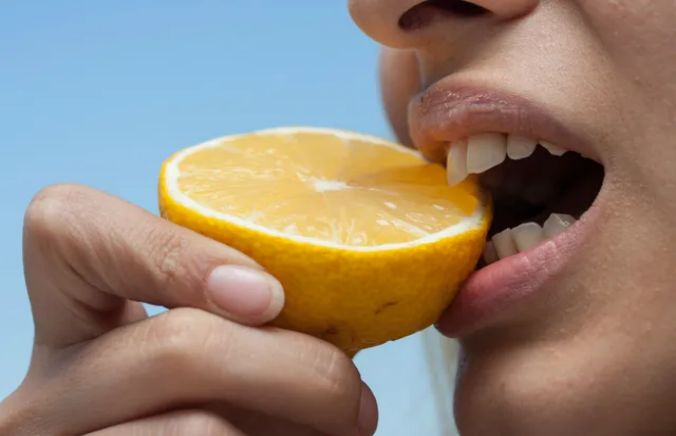
However, it's important to note that while these foods are beneficial, some fruits are acidic. It's best to rinse your mouth after eating them rather than brushing your teeth immediately to avoid additional irritation.
IV. Sugar: The "Hidden Culprit" of Oral
When discussing the impact of diet on teeth, sugar is a crucial factor.
Many people know that "eating sugar causes cavities," but the issue isn't just about "how much" but also "how" you eat it.
When you ingest sugar, bacteria in your mouth use it to produce acid. This acid slowly erodes the tooth surface, eventually leading to cavities.
More importantly, if you frequently consume sweets, such as snacking and drinking sugary drinks throughout the day, your teeth will be in this "acidic environment" for extended periods, increasing the risk.
Therefore, rather than completely eliminating sugar, a more realistic approach is to reduce the frequency, such as concentrating it during mealtimes rather than constantly eating it.
Advertisement
Advertisement
Tips For Getting Free Dental Work
1. Be prepared to provide documentation of your income and place of residence.
Many free dental clinics require patients to provide proof of income and residence in order to qualify for services.
2. Call ahead to schedule an appointment.
Most free dental clinics require patients to make an appointment in advance.