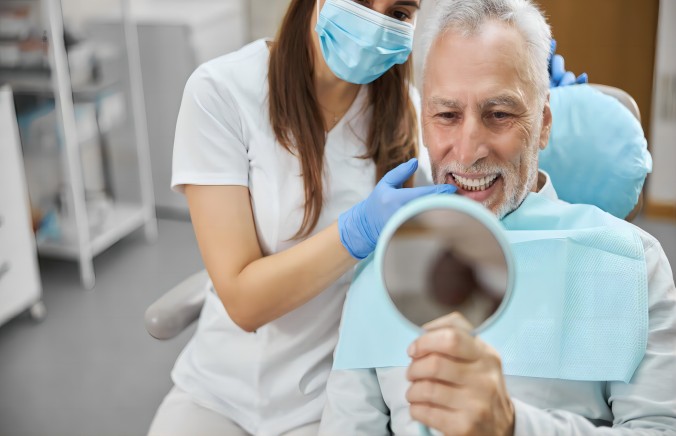
Dental Implant
4 Innovative Pioneers in Dental Implants
5 mins Read
Last Updated :Advertisement
3D printing
Nowadays, technology is advanced, and treatment methods are becoming more and more advanced. Dental implants are a particularly powerful technology. It has changed the lives of many people. The technology is becoming more and more precise, the efficiency is getting higher and higher, and most importantly, patients have suffered less. When it comes to new technologies for dental implants, 3D printing is a hot topic. How is it powerful? It can make the most suitable implant according to the condition of each person's teeth. Just like custom-made clothes, it fits well and is comfortable. This is all thanks to advanced imaging technology, such as CBCT scanning. Through this technology, doctors can take a three-dimensional model of the patient's jaw like making a movie. In this way, doctors can design and make implants based on this model to make it perfectly match the patient's teeth. With this customized implant, the risk of surgery is greatly reduced, the wound heals faster, and the best treatment effect can be obtained. In the long run, the teeth are both beautiful and healthy.
Biocompatible materials
Many people hope to find an effective way to replace teeth. This has also driven researchers and doctors to continue to explore and find the most advanced technologies and methods. The emergence of biocompatible materials makes dental implants more durable and more in line with the needs of the human body. Titanium is a very strong material. It is not only strong and corrosion-resistant, but also integrates well with human tissue, so it has always been the first choice for dental implants. In addition, there will be some new materials, such as zirconium oxide, which are not only beautiful, but also compatible with sensitive tissues. These materials have been tested many times to ensure that they are safe and harmless, making dental implants more durable, reducing the risk of adverse reactions, making teeth look more beautiful, and helping us restore the function of the oral cavity, protect facial structure, and make us more confident.
Smart implants
The combination of IoT technology and dental implants means the era of smart oral healthcare is coming. Smart devices can monitor oral health in real time. These smart implants have sensors and microchips that can monitor various conditions in our mouths, such as the strength of biting, temperature, and pH. In this way, even if the doctor is not around, he can know the condition of the implant through these real-time data, discover problems early, and take timely actions to prevent the problem from getting worse. At the same time, such implants also allow patients to better participate in their own oral health management, and are more willing to take care of their oral health according to the doctor's advice. This technology makes oral healthcare smarter and more convenient, and both doctors and patients can benefit from it.
Minimally Invasive Techniques
New technologies and trends in dental implants are changing the face of oral care and bringing unprecedented benefits to patients. The era of minimally invasive implants has emerged as a result of the continuous improvement of surgical techniques. This technique can minimize damage to surrounding tissues and make the recovery process faster. With the help of computer-aided design and manufacturing software, implant surgery can more accurately place implants with only a small incision. This will greatly reduce post-operative discomfort and swelling, while preserving soft tissue structure to improve the overall aesthetic effect. Flapless surgery and immediate loading technology are also making the implant process simpler and faster. This means that patients can restore the function and beauty of their teeth faster. With these technologies, we are not far away from a world where tooth loss is no longer a problem and everyone can live a confident and fulfilling life.
Advertisement
Advertisement
Tips For Getting Free Dental Work
1. Be prepared to provide documentation of your income and place of residence.
Many free dental clinics require patients to provide proof of income and residence in order to qualify for services.
2. Call ahead to schedule an appointment.
Most free dental clinics require patients to make an appointment in advance.