Tooth KnowLedge
What are cavities and tooth decay?
5 mins Read
Last Updated :Advertisement
Tooth decay and caries
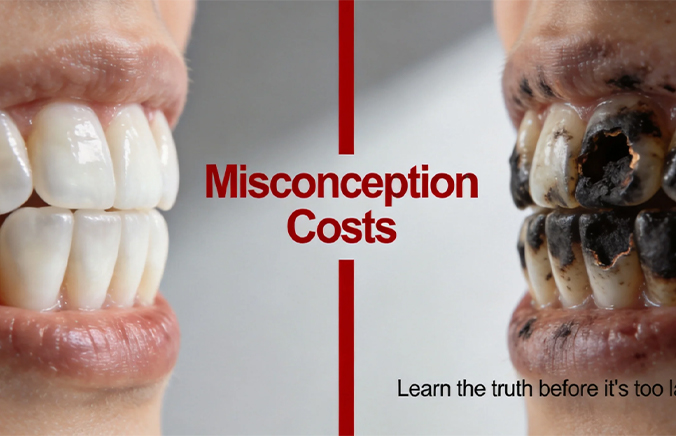
A healthy set of teeth is the source of a person's self-confidence, and there are many dental problems that come with it. The most common one is tooth decay. Tooth decay, which we usually call tooth decay, is the place where the surface of the teeth is damaged. From the appearance, you can see the black wear on the teeth. This is the result of the interaction between the bacteria in the mouth, the food you have eaten, the saliva and the structure of the teeth themselves. These bacteria are mainly Streptococcus mutans and Lactobacillus, which survive on the sugar and starch in the food and drinks we eat. When we eat foods containing sugar or starch, these bacteria will eat these foods and then produce acid, which will erode the protective shell on the outside of the teeth - enamel, causing tooth demineralization. This situation does not happen just a few times, but it happens repeatedly due to long-term lack of attention to dental hygiene. The protective shell of the teeth becomes weaker and weaker, and finally tooth decay is formed.
Causes
So what causes our dental problems? There are many reasons for the formation of caries. Here are a few common ones to share with you: not brushing your teeth regularly can lead to bacterial growth and tooth decay; incorrect brushing and flossing methods can cause bacteria to accumulate on your teeth, increasing the risk of plaque and tooth decay; frequent snacking, such as juice and cola, which are high in sugar and acid, can provide conditions for bacterial growth and acid production, corroding the protective shell of the teeth and making them more susceptible to tooth decay; genetic factors can also affect the protective shell of our teeth. Some people are born prone to tooth decay, while others don't pay much attention to oral problems and have good teeth (of course, this is not common). It is the genetic problem that determines whether you are more prone to tooth decay; the elderly and children are at greater risk of tooth decay. Children don't know how to keep clean, and the elderly develop tooth decay due to gum recession or dry mouth due to aging.
How to check if you have caries
So, before we go to the hospital to see a dentist, how can we check if our teeth have caries? We can make some simple judgments to know whether we have caries: People with caries will have toothaches. Needless to say, toothaches will feel sore and swollen when eating or drinking, sore and weak when biting, and sensitive to hot, cold, sweet or sour food and drinks; the surface of healthy teeth is white, and the presence of holes, pits, and black spots on the surface of teeth means that there is a problem with the teeth. This problem is divided into large and small. If these black marks are only a small piece, you can ignore them if you can see them with your naked eyes. If they are large and numerous, then they are caries; teeth that already have caries will change their appearance due to stimulation, from beautiful white to white with spots and then to brown or even black areas. At this time, you don’t need to test yourself, and go to the hospital for treatment.
Advertisement
Advertisement
Tips For Getting Free Dental Work
1. Be prepared to provide documentation of your income and place of residence.
Many free dental clinics require patients to provide proof of income and residence in order to qualify for services.
2. Call ahead to schedule an appointment.
Most free dental clinics require patients to make an appointment in advance.