Tooth KnowLedge
Common Dental Misconceptions That Lead to Permanent Damage
15mins Read
Last Updated :Advertisement
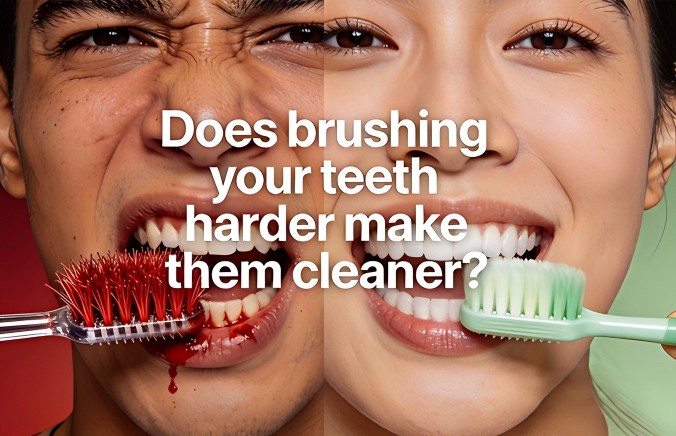
Myth 1: “Brushing Harder Gets Teeth Cleaner”
One of the most pervasive dental misconceptions—globally, from Tokyo to Toronto, Nairobi to New York—is the belief that applying more pressure while brushing leads to cleaner teeth. This myth is rooted in the idea that “more effort = better results,” but when it comes to oral care, the opposite is true. Enamel, the hardest tissue in the human body, is surprisingly fragile when subjected to aggressive brushing. Over time, scrubbing too hard with a stiff-bristled toothbrush or using a sawing motion wears away enamel, creating tiny grooves (called wedge-shaped defects) at the base of the teeth near the gumline. These defects expose the underlying dentin, a softer layer that contains tiny tubules leading to the tooth’s nerve, causing chronic sensitivity to hot, cold, sweet, or acidic foods.
The damage doesn’t stop at enamel erosion. Aggressive brushing also irritates and damages the delicate gum tissue, leading to gum recession—a permanent condition where the gums pull away from the teeth, exposing the tooth roots. Receding gums not only increase sensitivity but also create gaps where plaque and tartar can accumulate, accelerating gum disease and increasing the risk of tooth loss. A 2025 study published in the Journal of Dental Research found that nearly 40% of adults worldwide brush too hard, with 15% showing signs of enamel erosion and gum recession by age 35. The solution is simple: use a soft-bristled toothbrush, hold it at a 45-degree angle to the gumline, and use gentle circular motions (the Bass method) for two minutes twice a day. Brushing should feel like a gentle massage, not a scrub—your gums should never bleed from proper brushing.
Myth 2: “Baby Teeth Don’t Need Treatment—They Fall Out Anyway”
Across cultures, parents often dismiss cavities in baby teeth (primary teeth) with the phrase, “They’ll fall out soon, so why bother?” This myth is particularly dangerous for children’s long-term oral health, as baby teeth play critical roles that extend far beyond early childhood. Primary teeth act as “space savers” for permanent teeth, guiding them into their correct positions as they erupt. If a baby tooth decays and is lost prematurely, adjacent teeth can shift into the empty space, causing overcrowding, misalignment, and even impaction of permanent teeth—issues that often require expensive orthodontic treatment later in life. In severe cases, untreated cavities in baby teeth can lead to infections that spread to the developing permanent teeth, causing permanent discoloration or damage to the tooth’s structure.
The harm of this myth extends beyond physical damage: it also teaches children to neglect oral health from an early age. A child who learns that baby teeth are “disposable” is less likely to develop good brushing and flossing habits, increasing their risk of cavities and gum disease as adults. According to the WHO, over 70% of children worldwide have cavities in their primary teeth, and many of these cases go untreated due to this misconception. The facts are clear: baby teeth need the same care as permanent teeth. Parents should brush their children’s teeth twice a day (using a small, soft-bristled toothbrush and a pea-sized amount of fluoride toothpaste), avoid frequent sugary snacks and drinks, and take their child to the dentist by their first birthday. Treating cavities in baby teeth not only prevents pain and infection but also sets the stage for a lifetime of healthy oral habits.
Advertisement
Advertisement
Tips For Getting Free Dental Work
1. Be prepared to provide documentation of your income and place of residence.
Many free dental clinics require patients to provide proof of income and residence in order to qualify for services.
2. Call ahead to schedule an appointment.
Most free dental clinics require patients to make an appointment in advance.