Tooth KnowLedge
What health risks should elderly people be particularly aware of when getting dental implants?
16mins Read
Last Updated :Advertisement
Making Safe, Informed Decisions About Implants in Old Age
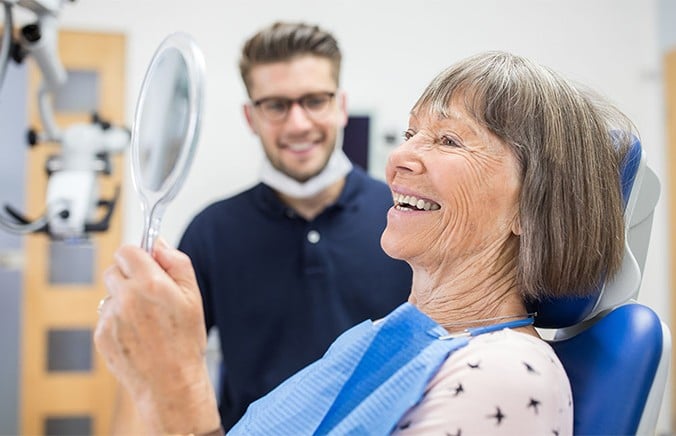
Dental implants can be a wonderful solution for elderly patients with missing teeth, restoring their ability to eat, speak, and smile with confidence. But these benefits come with unique risks—risks that stem from age-related physiological changes, chronic health conditions, medication interactions, and cognitive or mobility challenges. For elderly patients, the key to safe implant treatment is not to avoid implants entirely, but to approach the process with caution, thorough evaluation, and specialized care.
If you are an elderly person considering dental implants, or a caregiver supporting a senior, remember these key takeaways: First, prioritize a comprehensive preoperative evaluation that includes your entire medical history and collaboration between your dentist and primary care doctor. Second, be honest about your medications, chronic conditions, and any cognitive or mobility limitations—this information is critical for your safety. Third, follow your dental team’s instructions for postoperative care, and ask for help if you need it. And finally, be patient—healing takes longer for seniors, but the wait is worth it for a safe, stable implant.
For dental professionals, the responsibility lies in providing personalized, geriatric-focused care—one that recognizes the unique needs of elderly patients and prioritizes safety over convenience. By staying informed about the latest research, collaborating with medical specialists, and providing clear education to patients and caregivers, dental professionals can help more seniors safely benefit from dental implants.
At the end of the day, the goal of implant treatment for elderly patients is not just to replace missing teeth—it’s to improve their quality of life without putting their health at risk. With proper planning, care, and collaboration, this goal is achievable. As Mrs. Thompson’s case shows, age should not be a barrier to a healthy, functional smile— but it should be a reminder to proceed with caution, respect the body’s limits, and prioritize safety above all else.
Advertisement
Advertisement
Tips For Getting Free Dental Work
1. Be prepared to provide documentation of your income and place of residence.
Many free dental clinics require patients to provide proof of income and residence in order to qualify for services.
2. Call ahead to schedule an appointment.
Most free dental clinics require patients to make an appointment in advance.