Dental Implant
Dental Implants vs. Traditional Dentures
12mins Read
Last Updated :Advertisement
Differences in chewing function
In the field of tooth restoration, the restoration of chewing function is one of the issues that patients are most concerned about. Dental implants and traditional dentures are two common methods of tooth restoration, and there are certain differences in their chewing functions.
1. The chewing function of traditional dentures
Traditional dentures mainly include removable dentures and fixed dentures, and they have their own characteristics in chewing function.
Removable dentures: Removable dentures are fixed to the surrounding teeth through clasps and bases, and their chewing function is limited by the following factors:
Poor stability: Removable dentures are prone to displacement during chewing, resulting in reduced chewing efficiency.
Limited chewing strength: Due to the poor fixation of removable dentures, patients need to be careful when chewing hard food to prevent the dentures from falling off.
Poor taste experience: Removable dentures may cause discomfort when chewing, affecting the patient's eating experience.
Fixed dentures: Fixed dentures are supported by adjacent teeth, and the chewing function is relatively good, but there are still the following shortcomings:
Limited chewing strength: Although fixed dentures have better stability, the chewing strength is still not as good as natural teeth.
Long adaptation period: Fixed dentures require a certain amount of time to adapt, and the patient's chewing function may be affected during the adaptation period.
2. The chewing function of dental implants
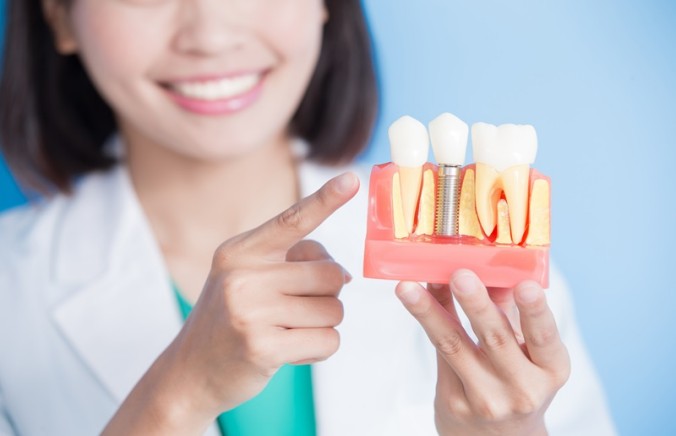
Dental implants are to implant artificial tooth roots into the jawbone, and then install the crown after it is combined with the bone. The chewing function of dental implants has the following advantages:
High stability: The artificial tooth roots of dental implants are biologically combined with the jawbone, and the stability is extremely high. Patients can hardly feel the difference from natural teeth when chewing.
The chewing force is close to that of natural teeth: Dental implants can withstand greater chewing force, and patients do not need to worry about loosening or falling off the tooth roots when chewing hard food.
Good taste experience: When chewing, the taste of dental implants is similar to that of natural teeth, allowing patients to enjoy food better.
3. Reasons for differences in chewing function
Fixing method: The fixing method of dental implants makes it more stable when chewing, while the fixing method of traditional dentures is relatively poor, resulting in limited chewing function.
Root support: Dental implants have independent artificial roots, and the chewing force is effectively transmitted. Traditional dentures rely on surrounding teeth or bases for support, and the transmission of chewing force is limited.
Biological integration: The artificial root of dental implants is biologically integrated with the jawbone, making the chewing function closer to natural teeth.
4. The impact of differences in chewing function on patients
Eating habits: Dental implant patients can choose food more freely and enjoy delicious food. However, patients with traditional dentures need to be cautious in their diet to avoid damage to their dentures.
Nutritional intake: Dental implants help patients chew food better, promote digestion and absorption, and are beneficial to nutritional intake. Traditional denture patients may affect nutritional intake when their chewing function is limited.
Oral health: When dental implant patients chew, the root bearing force is uniform, which is beneficial to oral health. When traditional denture patients chew, they may cause additional burden on surrounding teeth.
The difference in chewing function between dental implants and traditional dentures makes dental implants have obvious advantages in restoring patients' oral functions. Of course, the specific choice of which repair method should be comprehensively considered according to the actual situation and needs of the patient. If conditions permit, dental implants are undoubtedly the best choice for restoring chewing function.
Advertisement
Advertisement
Tips For Getting Free Dental Work
1. Be prepared to provide documentation of your income and place of residence.
Many free dental clinics require patients to provide proof of income and residence in order to qualify for services.
2. Call ahead to schedule an appointment.
Most free dental clinics require patients to make an appointment in advance.