Oral health
Does One Xylitol a Day Really Help Reduce Your Risk of Cavities?
15mins Read
Last Updated :Advertisement
Don’t Just Brush Your Teeth! Use Xylitol This Way,
When it comes to dental care, many people’s first thoughts are brushing, flossing, and regular dental checkups—all of which are, of course, important. But there’s actually a little helper that many overlook: xylitol. You may have seen it in gum or candy, but it’s much more than just a “sugar substitute.” Many people simply view it as a “sugar-free” alternative, unaware that its role in oral health is actually quite practical—and offers long-term benefits.
Today, let’s talk about how to use xylitol effectively to truly protect your teeth. You can think of this article as a “collection of daily dental care tips” that you can put into practice right away, rather than the kind of content that makes sense but leaves you unsure of how to apply it.
I. What Exactly Is Xylitol? Why Is It Good for You
Xylitol is a sugar that’s “sweet but doesn’t harm your teeth.”
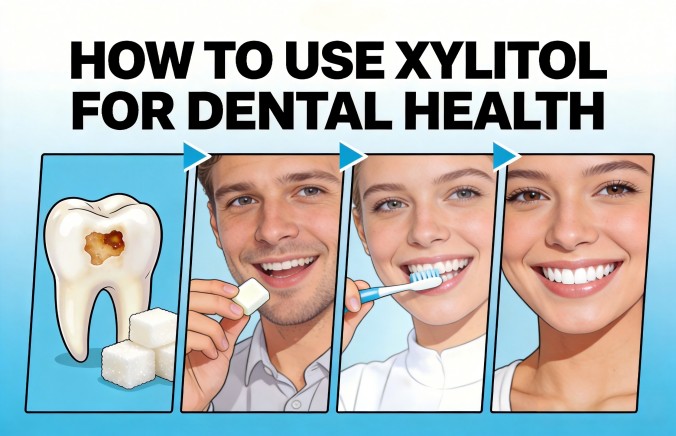
Unlike regular sugar (such as sucrose), the bacteria in your mouth can’t “benefit” from xylitol—meaning they can’t use it to produce acid. And acid is exactly what teeth fear most. Many cavities are essentially the result of the combined action of bacteria, sugar, and time, but xylitol steps in to replace the “sugar” in this chain, breaking the cycle.
So, to summarize simply:
Regular sugar = Feeds bacteria → Produces acid → Tooth decay
Xylitol = Bacteria can’t feed → No acid production → Safer teeth
What’s even more interesting is that long-term use of xylitol can “starve out some harmful bacteria,” making the oral environment healthier. This change doesn’t happen overnight; it occurs gradually, much like adjusting your diet—the difference becomes increasingly noticeable over time.
II. The Most Common Use: Chewing Xylitol Gum
This is the simplest and most recommended method.
Many people like to chew gum after meals. If you switch from regular gum to xylitol gum, you’re actually quietly protecting your teeth. This change requires almost no extra time or lifestyle adjustments—it’s a “seamless upgrade.”
Recommended usage:
Chew after meals (especially after eating sugary foods)
Chew for 5–10 minutes each time
2–3 times a day is sufficient
Why is chewing after meals particularly effective? Because this is when the acidity in your mouth is at its peak and bacteria are most active, and xylitol can help “disrupt their rhythm.” Additionally, chewing gum stimulates saliva production, and saliva itself acts as a natural “tooth cleanser,” helping to neutralize acidic environments and rinse away food particles.
If you often eat out and can’t brush your teeth immediately afterward, this method is especially suitable for you and serves as a practical alternative.
III. Can I Eat Candy Containing Xylitol?
Yes, but there are some things to keep in mind.
There are many “sugar-free candies” on the market, and xylitol is actually their primary source of sweetness. While these candies are indeed a healthier choice compared to regular candy, that doesn’t mean you should go overboard and eat them indiscriminately. Many people let their guard down as soon as they see the word “sugar-free,” and end up eating even more—which is actually putting the cart before the horse.
A few things to keep in mind:
Choose products where “xylitol” is listed as the first ingredient.
Don’t treat them as a constant snack (after all, they still contain calories).
Control your intake—a few pieces a day is sufficient.
One more thing to note: consuming too much xylitol may cause some “gastrointestinal reactions” (such as mild diarrhea). This is because it is absorbed differently in the intestines, so just avoid overdoing it.
Think of it this way:
Gum is better suited for “dental care”
Candy is more of a “snack substitute”
Both can be used, but they serve different purposes.
Advertisement
Advertisement
Tips For Getting Free Dental Work
1. Be prepared to provide documentation of your income and place of residence.
Many free dental clinics require patients to provide proof of income and residence in order to qualify for services.
2. Call ahead to schedule an appointment.
Most free dental clinics require patients to make an appointment in advance.