Tooth KnowLedge
Why do teeth "protest" after alternating between hot and cold stimuli?
18mins Read
Last Updated :Advertisement
The reason is actually quite simple.
Sometimes you might have had this experience: you finish a hot pot meal, immediately followed by an ice-cold drink, or in winter, you drink hot soup and then take a bite of ice cream. The next second, your teeth suddenly feel a sharp, tingling pain, making you wince. This habit of alternating between hot and cold foods is common in daily life, but why are teeth so "sensitive"?
Many people's first reaction is: Is there something wrong with my teeth?
But actually, this discomfort caused by alternating hot and cold foods isn't necessarily a serious problem, but it's definitely not "completely normal."
I. Teeth aren't as "strong" as you think.
Many people think teeth are the hardest part of the body, seemingly impervious to all kinds of stress. Indeed, the enamel on the surface of teeth is very hard, but it's not an "invincible shield."
The structure of a tooth is actually quite intricate, roughly divided into three layers from the outside in: the outermost layer is enamel, the middle layer is dentin, and the innermost layer is pulp. The dental pulp contains nerves and blood vessels, making it a very sensitive area.
The problem is that when the enamel is worn, cracked, or thin, hot and cold stimuli are more easily transmitted to the dentin and even the pulp. This is when you feel a sharp, painful, or even electric shock-like sensation.
Therefore, teeth aren't incapable of withstanding hot and cold, but rather have a "tolerance range." Once this range is exceeded, they begin to protest.
II. Alternating Hot and Cold: Teeth Actually Undergo "Thermal Expansion and Contraction"
The most direct effect of hot and cold stimuli can be explained by a very simple physical phenomenon—thermal expansion and contraction.
When you eat hot food, your teeth expand slightly; when you eat cold food, they contract. Although this change is subtle, if you frequently alternate between hot and cold in a short period, it's equivalent to subjecting your teeth to a constant cycle of "stretching-contraction-re-stretching."
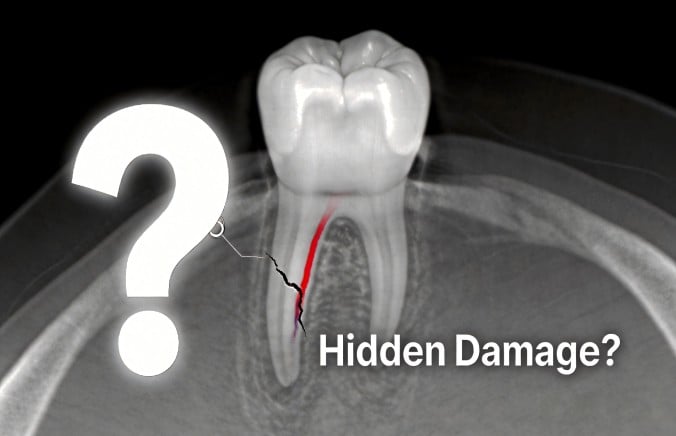
Over time, this can cause tiny cracks to appear on the tooth surface and even accelerate enamel wear.
You can think of it as a piece of glass; if it's constantly subjected to large temperature fluctuations, it's more likely to crack. While teeth are stronger than glass, prolonged exposure to such stress can still affect them.
III. Exposed Dentin: A Key Cause of Sensitivity
Many people's sensitivity to hot and cold doesn't develop overnight; it's a gradual accumulation.
When the enamel wears down, the underlying dentin is exposed. Dentin contains many tiny "channels" that connect directly to the dental pulp nerve.
Once hot or cold stimuli enter these channels, they are quickly transmitted to the nerve, causing noticeable pain.
This is why some people gasp when drinking ice water, or even find brushing their teeth uncomfortable. It's not that you're "too sensitive," but rather that your teeth are genuinely sending you signals.
IV. Receding Gum Makes the Problem More Noticeable
Besides enamel issues, another easily overlooked factor is the gums.
With age, or improper brushing techniques (such as brushing too hard or using a brush with too hard bristles), gums may gradually recede. Once the gums recede, the previously protected tooth roots are exposed.
The surface of the tooth root lacks the protection of enamel, making it more susceptible to hot and cold stimuli.
Therefore, eating cold or hot foods will more easily cause discomfort. So, some people feel, "I was fine before, why am I so sensitive now?" This is likely related to the condition of their gums.
Advertisement
Advertisement
Tips For Getting Free Dental Work
1. Be prepared to provide documentation of your income and place of residence.
Many free dental clinics require patients to provide proof of income and residence in order to qualify for services.
2. Call ahead to schedule an appointment.
Most free dental clinics require patients to make an appointment in advance.