Why do you need to control your blood pressure and blood sugar before getting dental implants?
Tooth KnowLedge
Why do you need to control your blood pressure and blood sugar before getting dental implants?
14 mins Read
Last Updated :
Advertisement
Why Blood Sugar Control Is Essential Before Dental Implants
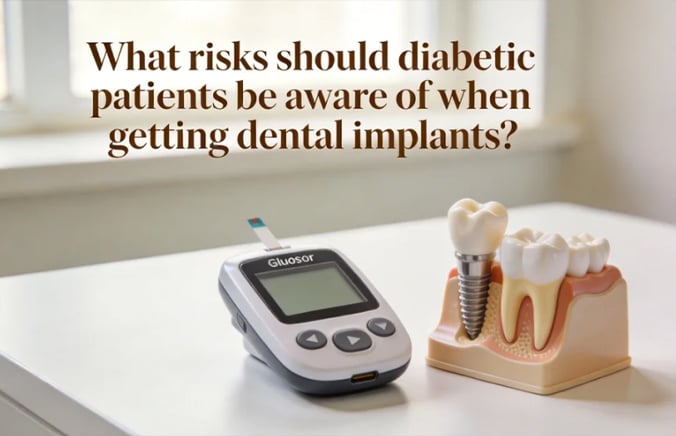
Diabetes—both Type 1 (insufficient insulin production) and Type 2 (insulin resistance)—is another major risk factor for implant failure, with uncontrolled blood sugar posing even greater threats than uncontrolled hypertension. Chronic hyperglycemia disrupts three critical processes for implant success: immune function, wound healing, and bone metabolism—creating a perfect storm for complications.
First, high blood sugar suppresses the immune system, making it harder for the body to fight off infection. Implant surgery creates an open wound in the mouth, which is naturally exposed to bacteria. In healthy patients, the immune system quickly responds to kill these bacteria and prevent infection. But in patients with uncontrolled diabetes, white blood cells (the body’s “soldiers” against infection) are less effective at fighting bacteria, increasing the risk of peri-implantitis (inflammation around the implant) and surgical site infections. A systematic review of 89 studies found that diabetic patients have a 77.7% higher risk of implant failure than non-diabetic patients, with infection being the leading cause of failure in this group. In severe cases, infections can spread beyond the mouth, leading to systemic complications like sepsis—life-threatening for both the patient and the implant.
Second, diabetes slows wound healing by impairing blood flow and reducing the production of collagen, a protein critical for tissue repair. After implant surgery, the gum tissue needs to close over the implant site, and the jawbone needs to grow around the implant—processes that rely on healthy blood flow and collagen production. In patients with uncontrolled diabetes, this healing process can take twice as long as in healthy patients, increasing the risk of wound breakdown, bleeding, and implant exposure. A 2024 study found that patients with a glycated hemoglobin (HbA1c—a measure of average blood sugar over 2-3 months) above 8% have a 40% higher risk of delayed wound healing after implant surgery compared to those with HbA1c below 7%.
Third, diabetes disrupts bone metabolism, reducing bone density and impairing the body’s ability to regenerate bone. Osseointegration depends on the jawbone’s ability to grow and fuse with the titanium implant, but high blood sugar inhibits the activity of osteoblasts (cells that build new bone) and increases the activity of osteoclasts (cells that break down bone). This leads to decreased bone density and slower osseointegration, increasing the risk of implant loosening or failure. A meta-analysis found that diabetic patients experience an average of 0.776 mm more marginal bone loss around implants than non-diabetic patients, with an additional 0.032 mm lost every month of follow-up. For patients with long-standing diabetes, this bone loss can be severe enough to make implants impossible without bone grafting.
Like hypertension, diabetes is manageable with proper care. Dental professionals recommend that patients with diabetes maintain a fasting blood sugar below 8 mmolL, a post-meal blood sugar below 10 mmolL, and an HbA1c below 7.5% before implant surgery. For patients with well-controlled diabetes (HbA1c below 8%), implant success rates range from 96.1% to 97.3% at one year—comparable to non-diabetic patients. Type 1 diabetics face a higher failure risk than Type 2 diabetics (4.4 times higher, according to a meta-analysis), but with strict glycemic control and interdisciplinary care, many can still successfully receive implants.