Why do you need to control your blood pressure and blood sugar before getting dental implants?
Tooth KnowLedge
Why do you need to control your blood pressure and blood sugar before getting dental implants?
14 mins Read
Last Updated :
Advertisement
The Basics: How Dental Implants Work—And Why Systemic Health Matters
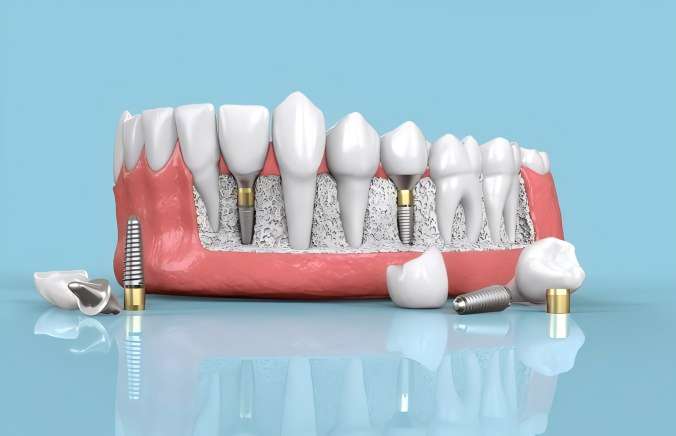
To understand why blood pressure and blood sugar control is essential, it’s first critical to grasp how dental implants function. A dental implant is a small titanium post surgically placed into the jawbone, where it acts as an artificial tooth root. The success of the procedure hinges on osseointegration—the process by which the titanium post fuses with the jawbone, creating a stable foundation for the artificial crown. This process requires three key things: a healthy immune system to prevent infection, adequate blood flow to deliver nutrients and healing cells to the surgical site, and normal bone metabolism to form new bone tissue around the implant.
Hypertension and diabetes disrupt all three of these processes. Hypertension impairs blood flow and weakens blood vessels, limiting the delivery of oxygen and nutrients to the jawbone and surgical site. Diabetes, characterized by chronic hyperglycemia (high blood sugar), suppresses the immune system, slows wound healing, and disrupts bone metabolism—all of which threaten osseointegration. Together, these conditions create a hostile environment for implant success, increasing the risk of surgery complications, infection, and implant failure. Importantly, these risks are not just theoretical: clinical research consistently shows that uncontrolled hypertension and diabetes significantly reduce implant survival rates, while well-controlled conditions yield success rates comparable to healthy patients.
It’s also important to note that dental implant surgery is not a minor procedure. It involves making incisions in the gum tissue, drilling into the jawbone, and placing the implant—all of which trigger a mild systemic stress response. For patients with uncontrolled blood pressure or blood sugar, this stress can exacerbate their conditions, leading to life-threatening complications like heart attacks, strokes, or severe infections. Pre-surgical control is not just about protecting the implant; it’s about protecting the patient’s overall health during and after surgery.
Why Blood Pressure Control Is Critical Before Dental Implants
Hypertension—defined as a systolic blood pressure (top number) of 130 mmHg or higher, or a diastolic blood pressure (bottom number) of 80 mmHg or higher—affects 1 in 3 adults worldwide. Often called the “silent killer,” hypertension damages blood vessels over time, reducing blood flow to organs and tissues—including the jawbone. For dental implant surgery, this damage translates to three major risks, making pre-surgical control a non-negotiable step.
First, uncontrolled hypertension increases the risk of intra-operative bleeding. During implant surgery, the dentist must make incisions in the gums and drill into the jawbone—both of which involve blood vessels. High blood pressure puts extra pressure on these vessels, making them more likely to rupture or bleed excessively. Excessive bleeding can obscure the surgical site, making it harder for the dentist to place the implant accurately, and can lead to hematomas (blood clots under the skin) or prolonged healing. A study by the International Journal of Oral and Maxillofacial Implants found that patients with uncontrolled hypertension are 3.2 times more likely to experience excessive bleeding during implant surgery compared to those with controlled blood pressure.
Second, hypertension increases the risk of cardiovascular complications during surgery. The stress of surgery, combined with the use of local anesthesia (which can temporarily raise blood pressure), can trigger a sudden spike in blood pressure in uncontrolled patients. This spike can lead to serious events like heart attacks, strokes, or arrhythmias—especially in patients with pre-existing heart conditions. According to guidelines from the American Heart Association and International Congress of Oral Implantologists (ICOI), patients with a systolic blood pressure above 180 mmHg or diastolic blood pressure above 100 mmHg should not undergo implant surgery until their blood pressure is controlled, as the risk of cardiovascular complications becomes unacceptably highsuperscript:4>.
Third, hypertension impairs osseointegration by reducing blood flow to the jawbone. The jawbone relies on a steady supply of oxygen and nutrients to heal and fuse with the implant. Hypertension narrows blood vessels, limiting this supply, which slows bone growth and increases the risk of implant loosening or failure. A 2024 meta-analysis of 24 studies found that while well-controlled hypertension does not significantly increase implant failure risk, uncontrolled hypertension is associated with a higher rate of marginal bone loss and implant instability over time. Additionally, when systolic blood pressure reaches or exceeds 148 mmHg, bone density decreases at a rate of 3.79 mgcm per year, further weakening the jawbone’s ability to support an implant.
The good news is that hypertension is manageable. Most patients can control their blood pressure with medication, lifestyle changes (like reducing salt intake, exercising regularly, and quitting smoking), or a combination of both. Dental professionals typically recommend that patients maintain a systolic blood pressure below 160 mmHg and diastolic blood pressure below 100 mmHg for at least 2 weeks before implant surgery to minimize risks. For patients with well-controlled hypertension (blood pressure below 13080 mmHg), implant success rates are nearly identical to those of non-hypertensive patients—proving that control, not the condition itself, is the key.