Tooth KnowLedge
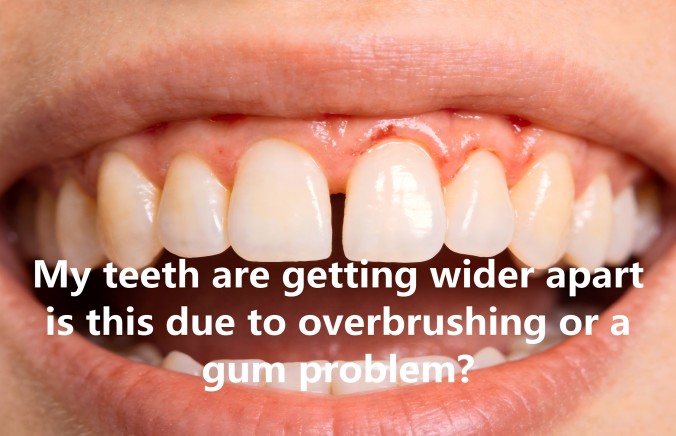
Widening Gaps Between Teeth: Over-cleaning or Gum Problems?
20mins Read
Last Updated :Advertisement
Wide Gaps Between Teeth are a Frequent Concern, Two Common Causes Easily Confused
Do you find traces of blood in your toothpaste foam when brushing in the morning? Do vegetable fibers stubbornly get stuck between your teeth while eating? Do you suddenly notice in the mirror that your once tightly packed teeth have gradually widened? Faced with increasingly wide gaps between your teeth, many people are caught in a dilemma: on one hand, they suspect it's due to brushing too hard or cleaning too frequently, causing "over-damage"; on the other hand, they worry that it's a gum problem, quietly eroding the "foundation" of their teeth. In fact, widening gaps between teeth are never caused by a single reason, but over-cleaning and gum problems are indeed the two most easily confused causes. Today, we'll clarify these points to help you avoid misconceptions and protect your oral health.
Correcting Misconceptions: Incorrect Cleaning is the Key to Damaged Teeth
Let's clarify a common misconception: Cleaning itself doesn't widen gaps between teeth; incorrect cleaning methods do. Many people equate "thorough cleaning" with "vigorous cleaning," using forceful sawing motions when brushing their teeth daily, frequently using hard-bristled toothbrushes, and even poking between their teeth with toothpicks. Over time, the gaps between their teeth do widen, which they mistakenly attribute to "over-cleaning." However, this isn't a matter of frequency or force, but rather mechanical damage caused by improper cleaning—fundamentally different from "over-cleaning."
Clarifying the Concepts: The Difference Between Over-Cleaning and Improper Cleaning
True over-cleaning actually refers to "over-cleaning the oral environment," such as brushing more than three times a day, brushing for more than five minutes each time, or frequently using dental floss or water flossers to excessively rub the gums, damaging the protective mucosa of the gums, causing redness, swelling, and recession, thus exposing the gaps between teeth. However, this is actually rare; most people's perception of "over-cleaning" is essentially due to "incorrect cleaning methods." For example, brushing horizontally with a hard-bristled toothbrush can directly wear down the enamel at the neck of the tooth and irritate the gums, leading to gum recession. Roughly picking your teeth with a toothpick can wedge against the gingival papillae, causing the gums to gradually recede. The gaps between teeth that were previously filled with gum tissue will slowly become visible and wider.
Gum Disease: The Number One Culprit for Widening Gap Between Teeth
Compared to improper cleaning, gum problems are the "number one culprit" for widening gaps between teeth, the most common being periodontitis. According to the Fourth National Oral Health Epidemiological Survey Report, periodontal disease has become the leading cause of tooth loss in adults in my country, and widening gaps between teeth are one of the typical signs of periodontal disease. Many people don't know that the stable alignment of our teeth relies entirely on the "support structure" of the gums and alveolar bone, like the roots of a tree, firmly fixing the teeth in place. Once the gums become inflamed, this "support crisis" quietly begins.
Origins of Periodontitis: Plaque and Tartar Sow the Seeds of Problems
Periodontitis begins with plaque and tartar in the mouth. Bacteria in the mouth combine with food debris to form sticky plaque. If not removed promptly, it hardens into tartar, adhering to the tooth surface and below the gum line, becoming a breeding ground for bacteria. The toxins released by these bacteria irritate the gums, causing gingivitis, manifested as red and swollen gums and bleeding gums when brushing. This is the initial warning sign and a reversible stage. However, many people attribute bleeding gums to "brushing too hard," ignoring this signal and allowing the inflammation to continue.
Advertisement
Advertisement
Tips For Getting Free Dental Work
1. Be prepared to provide documentation of your income and place of residence.
Many free dental clinics require patients to provide proof of income and residence in order to qualify for services.
2. Call ahead to schedule an appointment.
Most free dental clinics require patients to make an appointment in advance.