Dental Implant
Dental Implants vs. Traditional Dentures
12mins Read
Last Updated :Advertisement
Differences in fixation methods
In the field of dental restoration, dental implants and traditional dentures are two common restoration methods. Although they can both restore the patient's chewing function, there are great differences in the fixing methods.
1. Fixing methods of traditional dentures
Traditional dentures mainly include removable dentures and fixed dentures. Removable dentures are fixed to the surrounding teeth through clasps and bases, while fixed dentures are fixed by adjacent teeth as support.
Removable dentures: The fixation of removable dentures mainly depends on clasps and bases. The clasp is a metal hook-like structure that can hook the surrounding teeth to keep the dentures in place. The base is a plastic part that fits the oral mucosa and plays a role in supporting and stabilizing the dentures. However, due to the poor fixation of removable dentures, the dentures are prone to shifting when the patient chews hard food.
Fixed dentures: Fixed dentures are made by grinding the adjacent teeth down to make crowns, and then the dentures are fixed on the crowns. This fixing method is relatively stable, but it requires sacrificing healthy teeth as support, which has a certain impact on the patient's oral health.
2. Dental implant fixation method
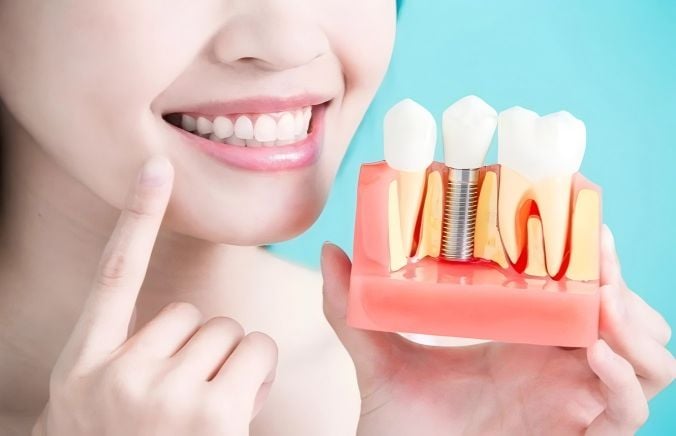
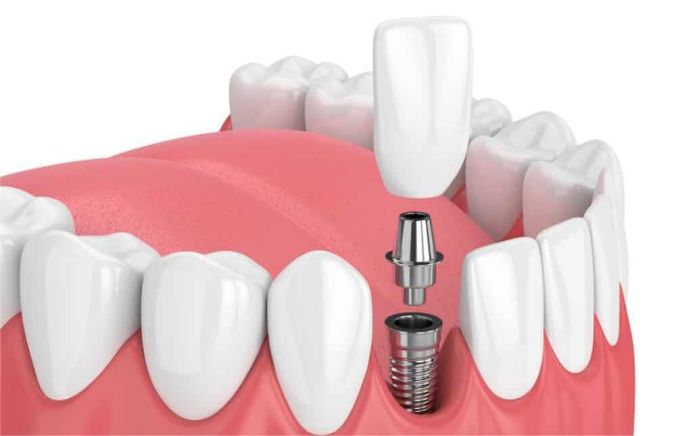
Dental implants are artificial tooth roots implanted into the patient's jawbone, and the crown is installed after the tooth root is combined with the bone. The fixation method of dental implants is similar to that of natural teeth, with the following characteristics:
Independent fixation: The artificial tooth root of dental implants is directly implanted into the jawbone without relying on the surrounding teeth. This fixation method makes the dental implants have high stability during chewing and are not easy to shift.
Biological combination: The artificial tooth root of dental implants is biologically combined with the jawbone and has good retention. This retention force enables dental implants to withstand greater chewing forces and resume normal diet.
No need to wear healthy teeth: Compared with traditional fixed dentures, dental implants do not need to wear surrounding healthy teeth, and have less impact on the patient's oral health.
3. Impact of differences in fixation methods
Stability: The fixation method of dental implants makes it highly stable during chewing, and patients can eat all kinds of food with confidence. Traditional dentures are prone to shifting when chewing hard food, affecting the patient's eating experience.
Oral health: Dental implants do not need to wear healthy teeth, which is conducive to maintaining the original structure of the oral cavity. Traditional dentures may cause some damage to surrounding teeth and increase the risk of oral diseases.
Service life: Since dental implants are more stable, their service life is usually longer. Traditional dentures are prone to wear and looseness during use and need to be replaced regularly.
Advertisement
Advertisement
Tips For Getting Free Dental Work
1. Be prepared to provide documentation of your income and place of residence.
Many free dental clinics require patients to provide proof of income and residence in order to qualify for services.
2. Call ahead to schedule an appointment.
Most free dental clinics require patients to make an appointment in advance.