Tooth KnowLedge
Should Wisdom Teeth Be Extracted? These Situations Must Be Taken Seriously
20mins Read
Last Updated :Advertisement
II. Be Wary of Wrongly Growing Wisdom Teeth that Compress Adjacent Teeth
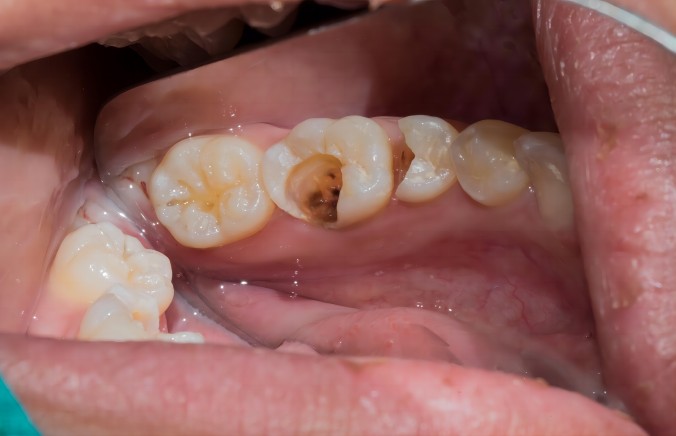
Due to insufficient space in the jawbone, many wisdom teeth cannot erupt vertically and instead grow tilted or horizontally. This is one of the most common reasons dentists recommend extraction. The biggest danger of these "crooked" wisdom teeth is that they compress adjacent healthy teeth, acting like a "bully neighbor," constantly taking up space, causing adjacent teeth to shift, become crowded, and even widen gaps and loosen.
More insidiously, the tilted wisdom tooth can create a gap between itself and adjacent teeth, making it easy for food debris and bacteria to accumulate. Over time, this can lead to cavities in adjacent teeth and gum recession. Many people only discover that their wisdom teeth are the culprit when they experience pain or cavities in their adjacent teeth. At this point, not only must the wisdom tooth be extracted, but the damaged adjacent teeth also need treatment, costing more time and money. Especially for those undergoing orthodontic treatment, the compression from wisdom teeth can affect the orthodontic results, causing the teeth to become misaligned again. Therefore, dentists usually recommend an evaluation of whether wisdom teeth need to be extracted before orthodontic treatment.
With the help of advanced 3D CBCT high-definition imaging systems, dentists can clearly see the growth angle and position of wisdom teeth, determine whether they will compress adjacent teeth, and intervene in advance to prevent damage to adjacent teeth. This visual diagnostic mode also allows us to understand our own dental condition more intuitively and make more reasonable decisions.
III. Completely Impacted Wisdom Teeth: Hidden Health Risks
Another situation is where wisdom teeth are completely impacted in the gums and bone, with no visible traces on the surface and no pain or discomfort. Many people think, "Since it doesn't hurt, I don't need to worry about it." However, in reality, these completely impacted wisdom teeth pose greater hidden risks. During their growth, wisdom teeth may continuously compress the surrounding bone, leading to bone resorption, and may even form cysts or tumors. Although this is rare, once it occurs, treatment becomes significantly more difficult.
During many oral examinations, dentists will use X-rays or CT scans to detect these impacted wisdom teeth. Especially during adolescence, when the jawbone is not yet fully hardened and the wisdom tooth roots are not fully developed, if an impacted wisdom tooth is found to pose a potential risk, extraction surgery is less invasive, recovery is faster, and it can prevent more serious problems later on. If you wait until adulthood, when the jawbone has hardened and the tooth roots are fully developed, extraction becomes more difficult, and the recovery time is longer.
IV. These Special Groups Need to Pay More Attention to Wisdom Tooth Issues
For certain groups, the risks associated with wisdom teeth are amplified, requiring more early attention. First, pregnant women: Hormonal changes during pregnancy make gums more sensitive, and previously healthy wisdom teeth may suddenly become inflamed and swollen. However, medication and surgery during pregnancy are strictly limited; anti-inflammatory drugs cannot be taken indiscriminately, and tooth extraction is not easily performed. They can only endure the pain, which may even affect the health of the fetus. Therefore, it is recommended that women have a comprehensive oral examination before trying to conceive to assess the condition of their wisdom teeth and, if necessary, have them extracted in advance to avoid complications during pregnancy.
Second, people with weakened immune systems, such as those taking long-term medications or suffering from chronic diseases, are more susceptible to wisdom tooth inflammation, as bacteria can spread more easily, causing systemic infections and worsening existing conditions. International students, due to academic pressure, irregular eating habits, and inadequate oral hygiene, are more likely to experience wisdom tooth inflammation. Furthermore, international students are often unfamiliar with local dental procedures, which can easily delay treatment. Therefore, it's crucial to pay close attention to their wisdom tooth condition beforehand.
Advertisement
Advertisement
Tips For Getting Free Dental Work
1. Be prepared to provide documentation of your income and place of residence.
Many free dental clinics require patients to provide proof of income and residence in order to qualify for services.
2. Call ahead to schedule an appointment.
Most free dental clinics require patients to make an appointment in advance.