Tooth KnowLedge
When is the "Best Time" to Start Brushing Your Child's Teeth? Don't Wait Until All Teeth Grow!
20mins Read
Last Updated :Advertisement
V. Why Start So Early? Baby Teeth Are Really Impor
Many people think that baby teeth will be replaced anyway, so protecting them doesn't seem to make much difference. However, baby teeth play a far more important role than imagined.
First, they affect eating. Poor teeth mean poor chewing ability, making children more likely to be picky eaters and affecting nutrient intake.
Second, they affect pronunciation. Many sounds require the coordination of teeth; severe dental problems can affect the clarity of speech.
Third, they affect the alignment of permanent teeth. If baby teeth decay or fall out prematurely, it can affect the growth position of the permanent teeth, leading to crooked teeth.
Therefore, don't treat baby teeth as "temporary workers"; they are actually the "foundation stage" for a child's oral health.
VI. Establishing a Brushing Habit is More Importan
When children are very young, the focus of brushing isn't on how thoroughly they brush, but on brushing every day.
You can make brushing a regular part of their routine, for example:
A quick brush after waking up in the morning.
A thorough brushing before bed.
The nighttime brushing is especially crucial. Because oral secretions decrease at night, bacteria can easily multiply if not cleaned properly.
You can use some tricks to make children more willing to cooperate, such as:
Using a fun toothbrush (cartoon-shaped).
Telling stories while brushing.
Using timed songs to make it more fun.
Gradually, brushing will transform from a "forced task" into a natural habit.
VII. When can we start teaching children to brush
Generally, around age 3, you can start gradually teaching children some simple brushing methods, such as:
Brushing downwards on the upper teeth.
Brushing upwards on the lower teeth.
Brushing back and forth on the chewing surfaces.
But don't expect too much; the focus at this stage is on "participation" and "imitation."
Most children don't achieve truly proper brushing techniques until elementary school.
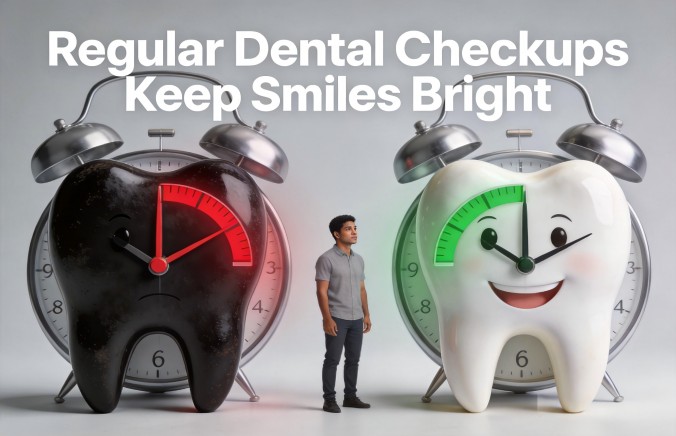
Eight, another crucial point: Regular checkups are more important than you think.
Besides brushing, there's something else equally important: regular dental checkups.
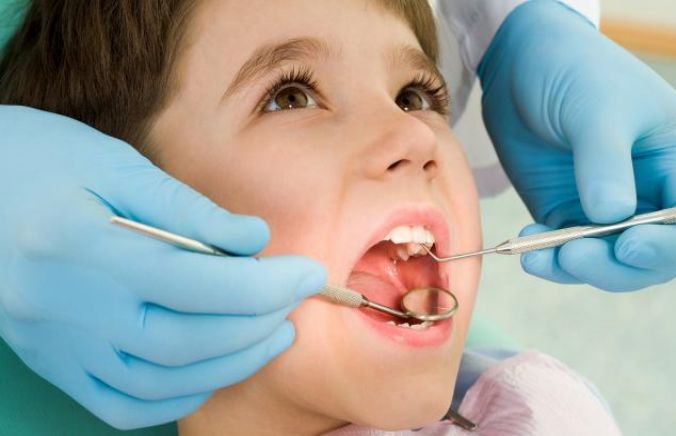
Many parents only take their children to the dentist when they complain of toothache, but by then, the problem is often quite serious.
A better approach is:
Start considering regular checkups as soon as your child's first tooth erupts.
Have a dental checkup approximately every six months.
This allows for early detection of problems, such as early cavities, misaligned teeth, etc.
IX. A Simple Yet Practical Timeline
0-6 Months (No Teeth): Clean gums with gauze to help them adapt.
Around 6 Months (First Tooth): Begin brushing with a toothbrush.
1-3 Years: Parents lead the brushing, with child participation.
3-6 Years: Gradually learn to brush, but parents still need to brush occasionally.
After 6 Years: Slowly transition to independent brushing.
Just remember this: The earlier you start brushing, the easier it is; the later you start, the more troublesome it becomes.
Teaching children to brush their teeth sounds simple, but it actually requires a lot of patience. Sometimes children will be uncooperative, cry, or resist, which is perfectly normal. But if you persevere, you'll find that once the habit is established, it becomes increasingly easier.
It's better to start gradually from the beginning than to try to fix problems later. After all, teeth are something children will use for a lifetime.
Advertisement
Advertisement
Tips For Getting Free Dental Work
1. Be prepared to provide documentation of your income and place of residence.
Many free dental clinics require patients to provide proof of income and residence in order to qualify for services.
2. Call ahead to schedule an appointment.
Most free dental clinics require patients to make an appointment in advance.